

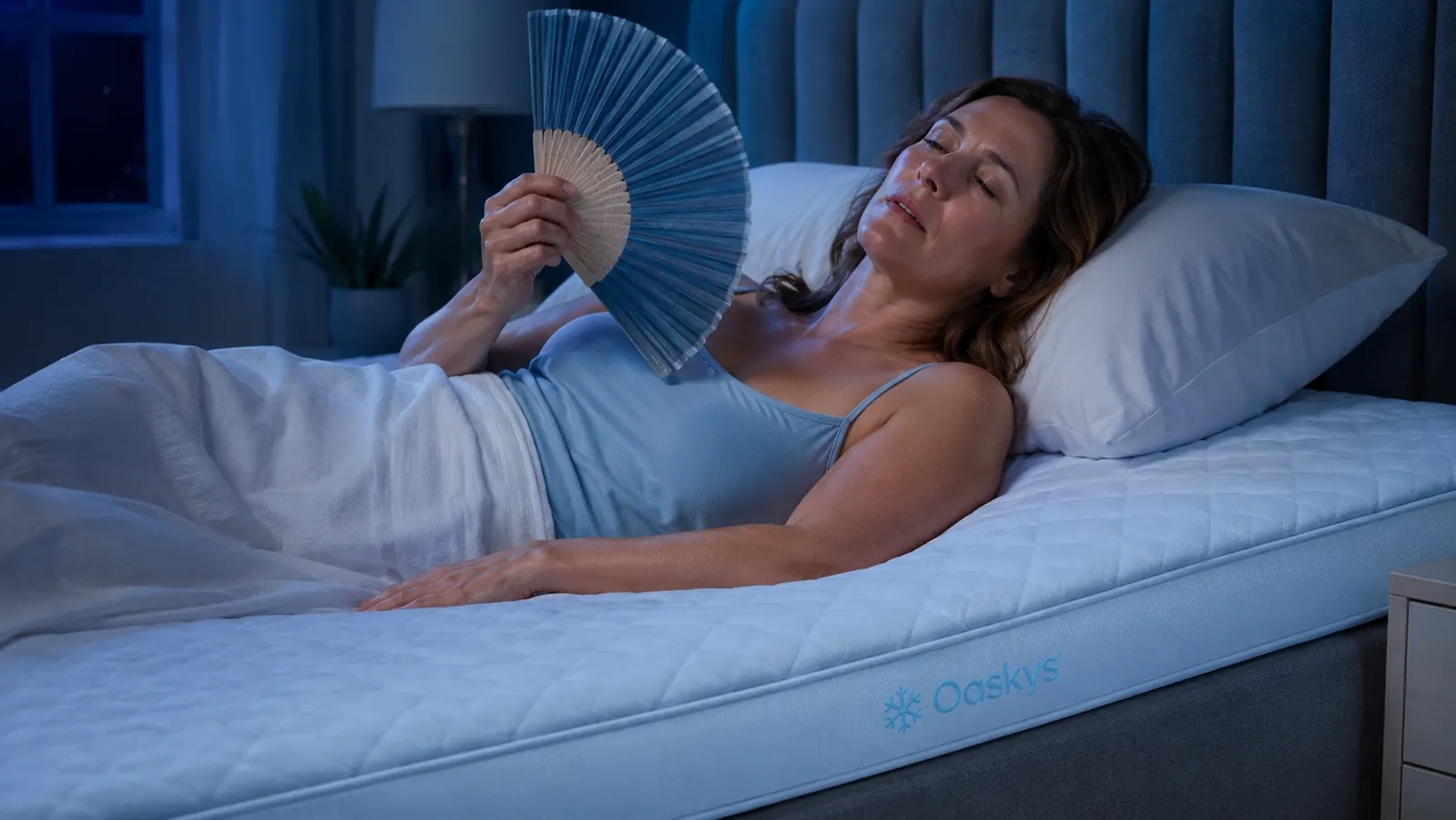
I am a hot sleeper. I know this because my husband bought me a fan for our anniversary and I was genuinely touched. For years, my solution was kicking off the comforter, flipping to the cold side of the pillow, and hoping I could fall back asleep before I got too warm again. Some nights that worked. A lot of nights, it did not. I'd lie there at 2:47am, staring at the ceiling, sweating through a tank top, wondering why I could not get this basic thing right.
Here is what I eventually figured out: the heat was not coming from the air in my room. It was coming from my mattress. Memory foam especially traps body heat like a storage unit for warmth. No fan is going to fix that. You have to address what is underneath you. That is where a cooling mattress topper comes in, and it is the central tool in this guide. I will walk you through every step, starting with what to look for in a topper, then the supporting tactics that help it work even better. The Oaskys cooling mattress topper is what I use and what I recommend as a starting point. With 78,786 reviews and a 4.4-star rating, it is one of the most-tested options out there for a reason.
Still waking up sweaty? Start here: the topper that 78,786 hot sleepers have tried.
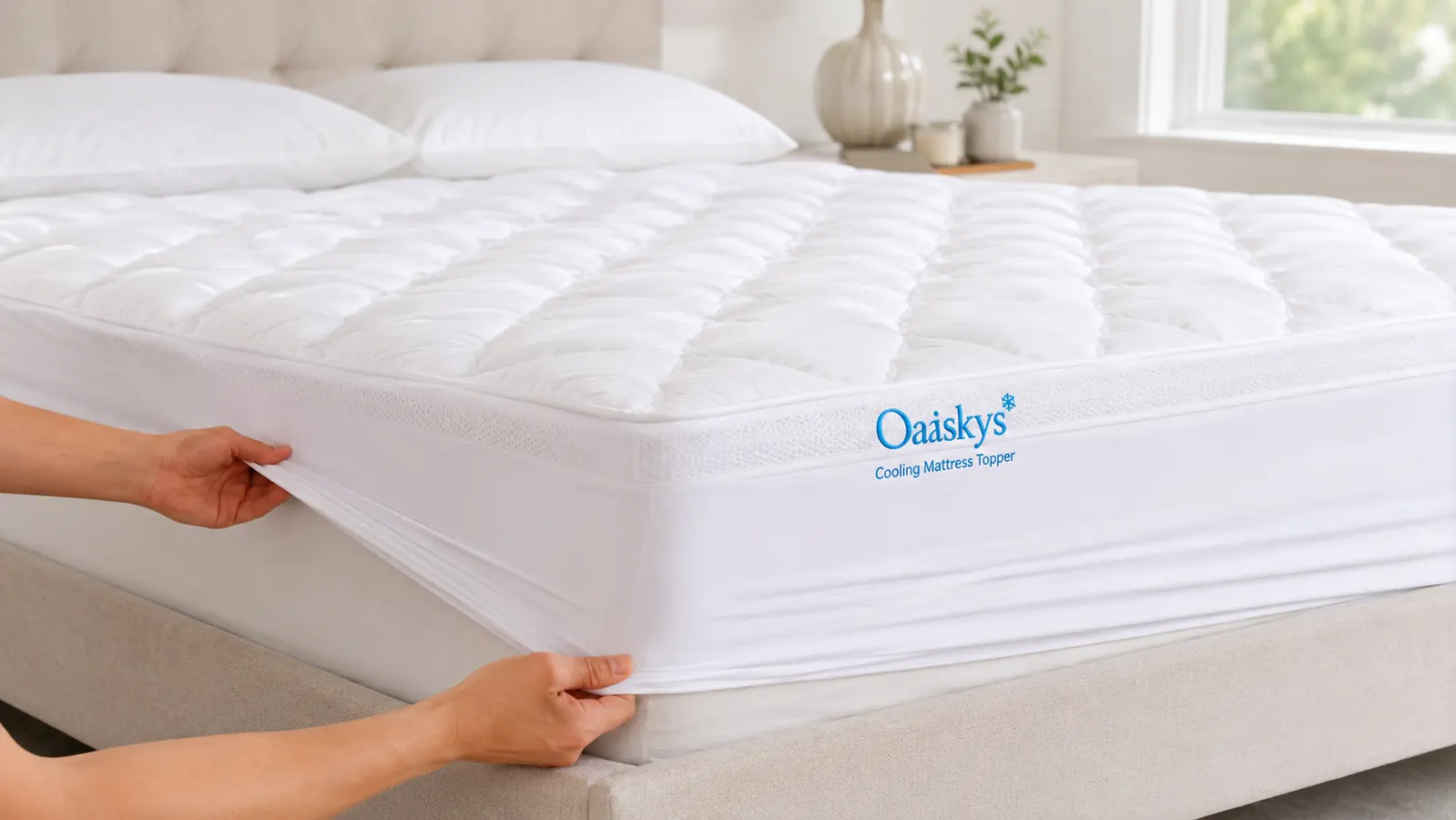
The Oaskys cooling mattress topper uses a down-alternative fill that does not trap heat the way memory foam does. It fits mattresses 8 to 21 inches deep with a fitted skirt, and it is machine washable. Check current pricing below before you read the rest of this guide.
Amazon Check Today's Price on Amazon →Step 1: Understand Why You Are Overheating in the First Place
Before you buy anything, it helps to know what is actually causing the problem. Most hot sleepers blame themselves or the ambient temperature, but the bigger culprit is usually the mattress surface itself. Dense foam mattresses, especially memory foam, absorb and hold body heat. The same contouring that makes them feel comfortable also creates a heat sink directly under your body. After an hour or two of lying on it, the surface temperature climbs noticeably, and that rising warmth is what wakes you up.
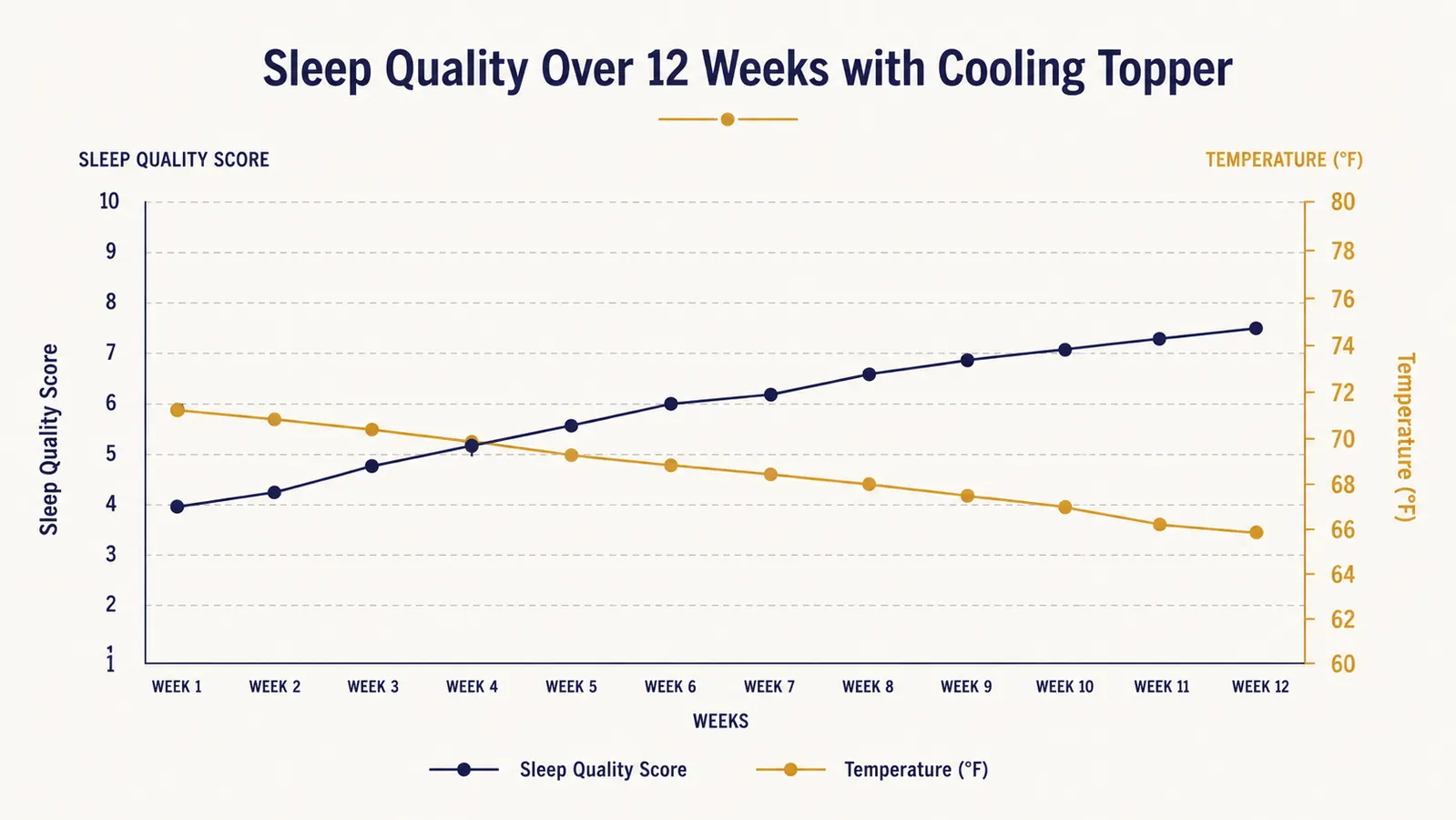
The fix is to put a breathable layer between you and that foam. A topper with a fill that does not conduct heat, like down alternative fiber, allows air to move around the fill clusters rather than trapping it. Your body still generates heat, but instead of that heat building up against the mattress surface, it dissipates upward and out. That difference in airflow is the reason a cooling topper works when a fan alone does not.
If you sleep hot and your mattress is more than five years old, this problem gets worse over time. Foam compresses, becoming denser and less breathable. A topper addresses the symptom without requiring you to replace the whole mattress.
Step 2: Choose the Right Topper Fill
Not all mattress toppers cool equally. There are three common fill types and they behave very differently when it comes to heat.
Memory foam toppers are the most popular but the worst choice for hot sleepers. They conform to your body, which feels great, but that contouring means less air circulation around you. Gel-infused memory foam toppers market themselves as a solution, but in real-world use, the cooling effect is modest and fades after an hour or two once the gel absorbs your body heat. Down and down-alternative fiber toppers do the best job for heat retention. The fill is lofted and airy, which means heat can rise through it rather than pooling against the surface. Down alternative, like the Oaskys topper uses, has the additional benefit of being hypoallergenic and machine washable. Latex toppers are a middle ground: more breathable than memory foam but heavier and more expensive.
If you are a confirmed hot sleeper, down alternative is the category to focus on. You want a fill weight that gives you some cushioning without being so dense that it starts acting like insulation. The Oaskys topper hits this balance well, offering a pillow-top loft without packing the fill so tightly that air movement stops.
Step 3: Install the Topper Correctly
This sounds obvious but there are a few things that actually matter here. First, let the topper air out for two to four hours before you put sheets on it. Toppers are often vacuum-compressed for shipping, and the fill needs time to fully expand. If you skip this step, the topper will feel thin and lumpy on the first night and you will wonder if you made a mistake. You did not. It just needs time.
Second, use the fitted skirt correctly. The Oaskys topper has an elastic skirt designed for mattresses 8 to 21 inches deep. Pull all four corners on before adjusting the sides. If you try to tuck the skirt corner by corner after the fact, the topper will shift during the night. Start at the head of the bed, anchor the two top corners, then stretch to the foot corners. This keeps it flat and prevents the annoying bunching that makes the surface uneven.
Third, do not put an additional foam pad on top of it. Some people layer a memory foam topper on top of a cooling topper thinking they get the best of both, but you cancel out the cooling benefit almost entirely. The foam layer sits between you and the breathable fill, trapping heat right where you are sleeping.

Step 4: Pair It With the Right Sheets
A cooling topper paired with the wrong sheets is like putting a great car engine in a brick. The sheets are the layer you actually contact all night, and they matter more than most people realize. Microfiber sheets, despite being sold everywhere, are the enemy of the hot sleeper. They feel silky but they do not breathe. Avoid them.
What you want is 100 percent cotton percale, or linen. Percale has a crisp, slightly cool feel even at room temperature because the weave structure allows air circulation. Thread count matters less than weave type: a 300-thread-count percale will sleep cooler than a 600-thread-count sateen. Linen sleeps even cooler than percale and gets softer with washing, but it wrinkles easily and costs more. Either works. What matters is that you are not wrapping yourself in a heat-trapping synthetic layer on top of the breathable topper you just bought.
A cooling topper paired with the wrong sheets is like putting a great car engine in a brick. The sheets are the layer you contact all night, and they undo the topper's work if you pick wrong.
Step 5: Set Up Your Room to Help the Topper Work
The topper does the heavy lifting, but your room environment either supports it or fights it. A few specific things make a real difference. Keep your bedroom thermostat between 65 and 68 degrees Fahrenheit if you can. Most sleep research points to this range as optimal for staying asleep because the body naturally cools during sleep cycles. If air conditioning is not an option, a box fan in the window pulling outdoor air in during the early morning hours (usually the coolest part of the night) can substitute.
A ceiling fan set to run counterclockwise in summer creates a wind-chill effect that helps even if the room temperature does not drop. Keep it running at medium speed rather than high. The goal is air movement over the bed, not a wind tunnel. If you or your partner are sensitive to the sound, a fan serves double duty as white noise, which is a separate sleep benefit.
Blackout curtains matter more than people expect. A room that heats up during the day from direct sunlight can be 5 to 8 degrees warmer than the rest of the house by evening. Dark curtains block that heat gain and mean you are starting the night from a cooler baseline. Combined with the topper and breathable sheets, a properly cool room turns an occasional good night's sleep into a consistent one.
What Else Helps
Beyond the main steps, a few smaller changes add up. Swap a heavy comforter for a lightweight cotton or eucalyptus-fiber blanket during warmer months. Wool, despite being associated with warmth, is actually temperature-regulating and worth trying if you want one blanket year-round. Avoid eating a large meal within two hours of bed: digestion raises your core temperature. A cool shower before bed also lowers your core temperature faster than simply lying in a cool room because the evaporating water accelerates heat loss from your skin. These feel like small tweaks but they compound with the topper to give you consistently cooler nights rather than just occasional ones.
On the maintenance side: wash your cooling topper every one to two months in cold water on a gentle cycle. The Oaskys topper is machine washable, which matters more than it sounds. Toppers accumulate body oils and dead skin cells that actually reduce breathability over time if you never wash them. Tumble dry on low with two or three clean tennis balls in the dryer to restore the loft. After washing, let it air out for an hour before putting sheets back on. That routine keeps the fill from compacting and preserves the airflow properties you bought it for.
You have read the whole guide. Here is where to start tonight.
The Oaskys cooling mattress topper is the core of this system. Down-alternative fill, fits queen through California king, machine washable, and at current pricing it is one of the most affordable ways to actually fix the overheating problem rather than manage it. Over 78,000 buyers have rated it 4.4 stars. Check what it costs today before you go back to kicking off the covers.
Amazon Check Today's Price on Amazon →