
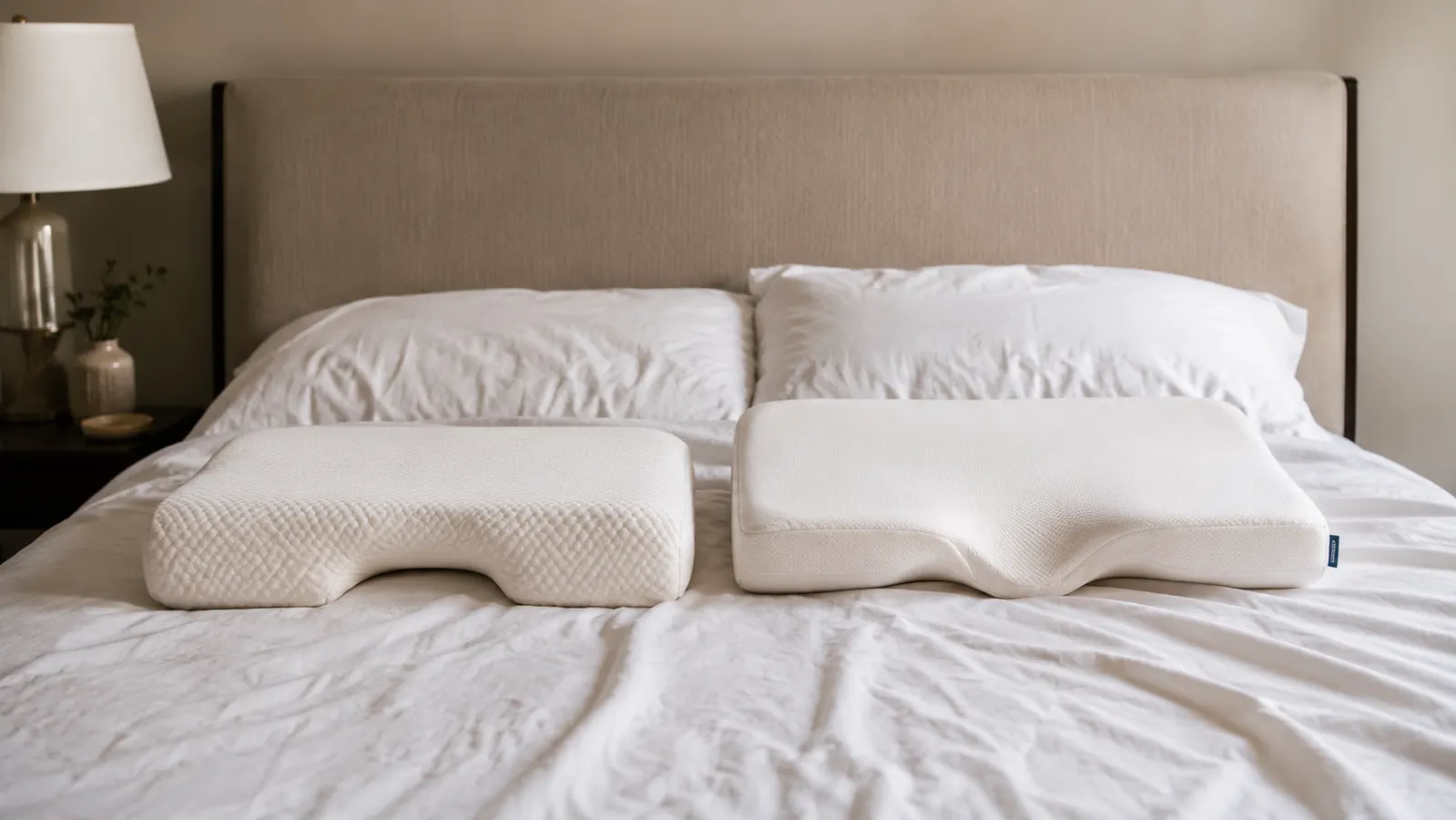
You wake up stiff again. You roll your neck and feel that familiar grind, that tight band of tension running from your skull to your shoulder blade. You have tried sleeping on your back. You have tried a rolled towel. You have Googled 'best pillow for neck pain' enough times that the ads follow you everywhere. At some point, the Tempur-Pedic brand shows up, the way a famous brand always does when you are hurting and ready to spend whatever it takes. Then you find the EPABO, which costs a fraction of the price and has tens of thousands of reviews. And now you are wondering whether the substantial price gap actually means anything.
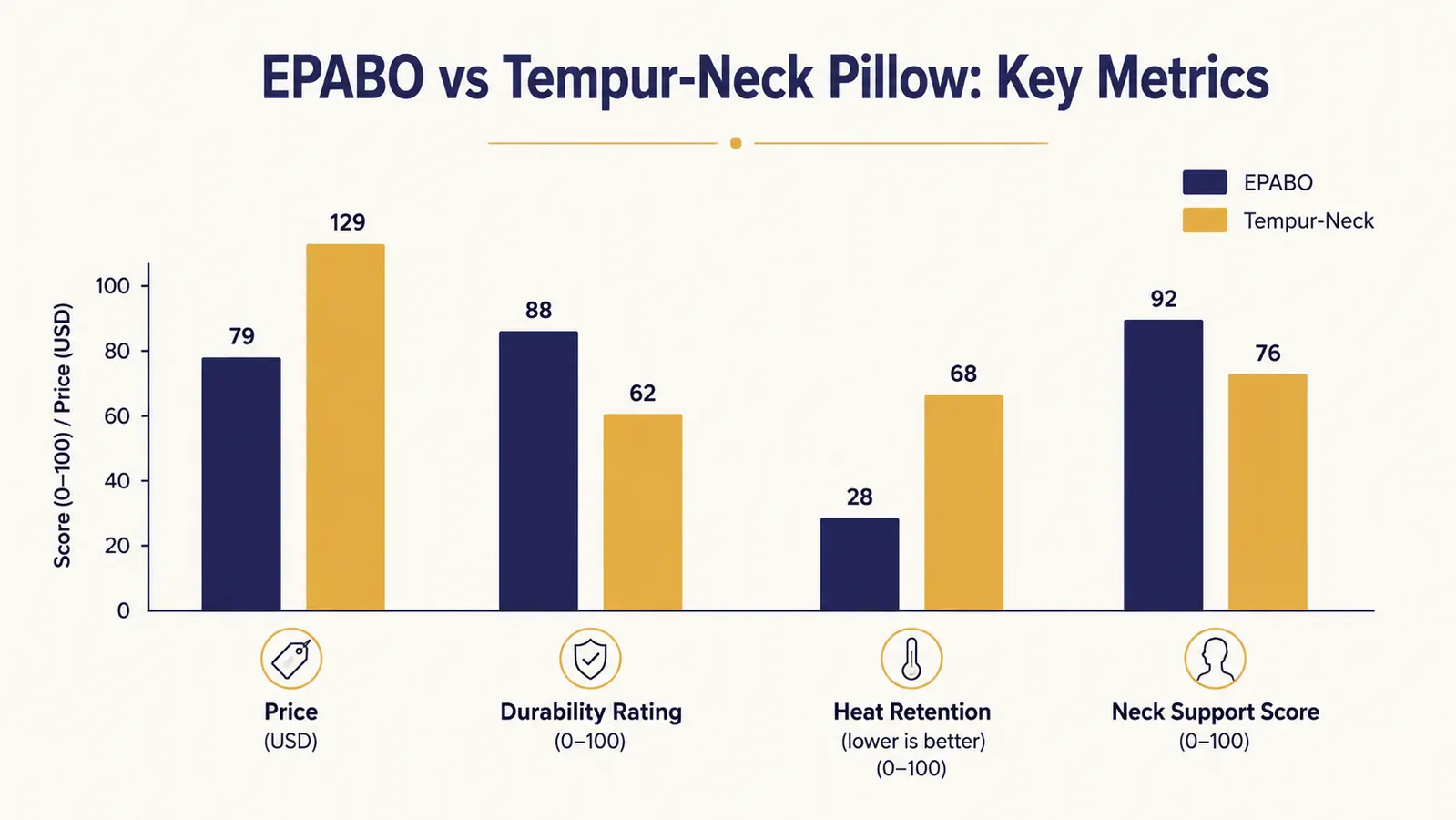
We tested both. Weeks of real nightly use, not a quick squeeze at a mattress store. The short answer: the EPABO contour memory foam pillow delivers the same core benefit, cervical spine alignment during sleep, at a price that makes the Tempur-Neck pillow very hard to justify for most people. Here is the full breakdown.
| EPABO Cervical Pillow | Tempur-Neck Pillow | |
|---|---|---|
| Price (current) | Mid-range | Premium to high-end range |
| Fill material | Butterfly-shaped memory foam (one piece) | Tempur proprietary viscoelastic foam (one piece) |
| Firmness | Medium-firm, slight give at the center groove | Firm, very little compression under the neck |
| Loft / pillow height | Two loft options included (regular and large insert) | Three separate size models (Small, Medium, Large) sold separately |
| Contour style | Butterfly/ergonomic with center groove and two side lobes | Traditional roll-front contour with one raised neck ridge |
| Cover washability | Removable, machine-washable cover | Cover is removable but hand-wash only recommended |
| Break-in period | 3-7 nights to adjust | 7-14 nights to adjust |
| Side-sleeper fit | Good on the higher lobe; slightly wide for petite frames | Depends on size purchased; size selection is tricky |
| Back-sleeper fit | Excellent; center groove cradles the cervical curve naturally | Excellent when the right size is chosen; less forgiving if wrong size |
One of these costs a fraction of the other. Your neck probably cannot tell the difference.
The EPABO cervical pillow has more than 27,000 reviews and a 4.1-star rating. It ships with two firmness inserts so you can dial in the loft without guessing your size. Check the current price before it changes.
Amazon Check Today's Price on Amazon →Where the EPABO Wins
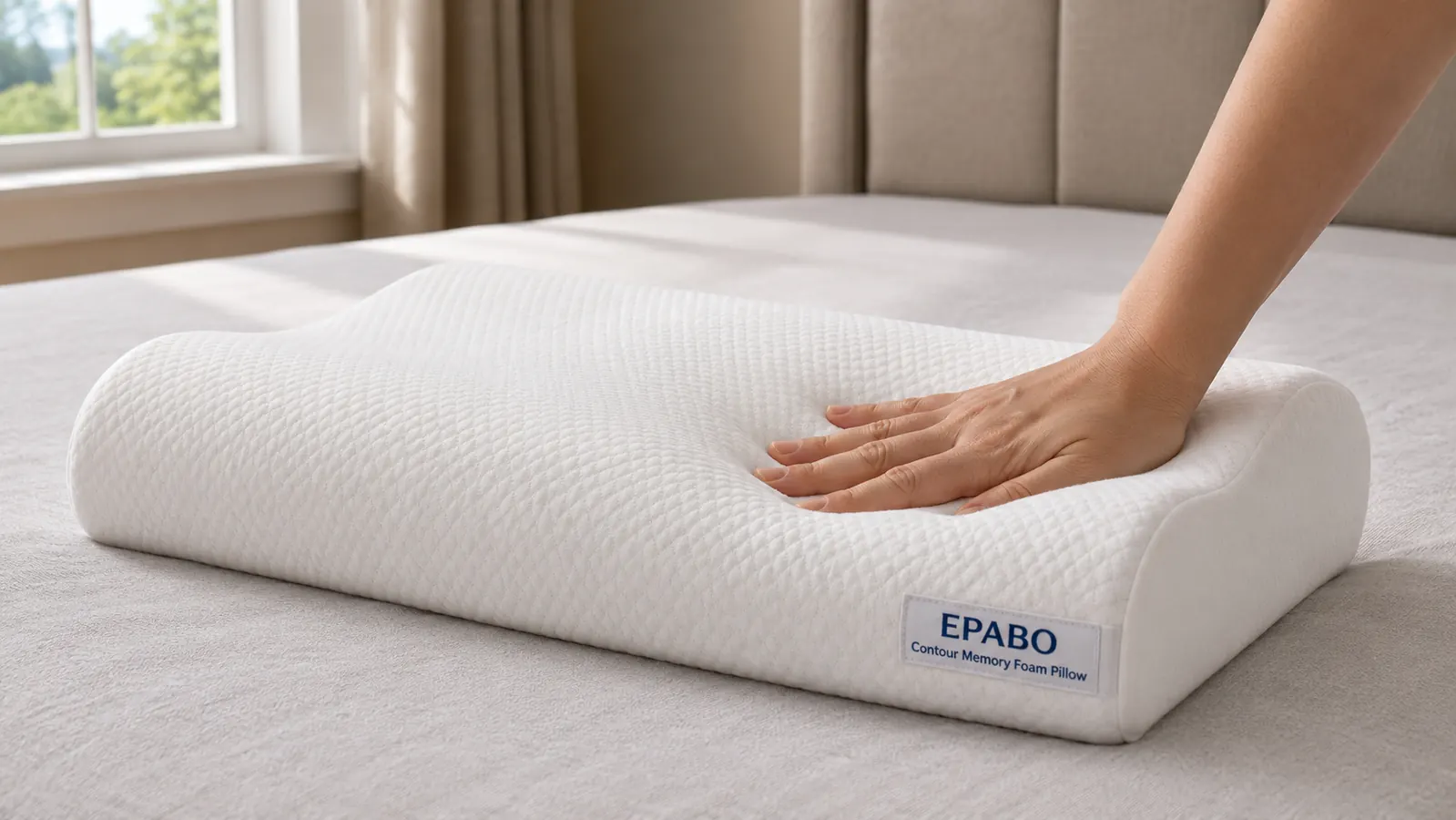
The EPABO's biggest advantage is its adjustability. The pillow ships with an additional insert that lets you raise the overall loft, so you are not forced to guess your size and re-order if you guess wrong. With the Tempur-Neck, you buy a Small, Medium, or Large based on your shoulder width and sleep position. Get it wrong and you either return the pillow or sleep on something that tilts your head too far in one direction. That is an expensive mistake to make twice.
The butterfly shape of the EPABO also handles back-to-side sleeping better than the single ridge on the Tempur-Neck. The two outer lobes give a side sleeper a natural shelf for their head while the center groove still cradles a back sleeper's cervical curve. If you move around at night, that versatility matters more than it sounds. We found ourselves waking up mid-lobe and still feeling supported, which is not something we could say for a single-ridge design.
The washability gap is also real. Both covers come off, but Tempur discourages machine washing because the cover can pucker. If you run warm or simply believe a pillowcase alone is not enough, tossing the EPABO cover in a cold, gentle cycle once a week is genuinely convenient. At a budget price point, it is the kind of practical detail that adds up.
Where the Tempur-Neck Wins
To be fair to the Tempur-Neck: the foam is exceptional. Tempur's proprietary viscoelastic material is denser and more pressure-responsive than standard memory foam. When you press a finger into the Tempur-Neck and pull it away, the indent recovers slowly and evenly. The EPABO's foam is good but softer; it recovers a bit faster and feels less precise under the neck. If you have a very specific spinal alignment recommendation from a physical therapist, the Tempur's consistency and firmness might hold that position more reliably across the night.
The Tempur-Neck also has a decade-plus of clinical and consumer recognition behind it. Occupational therapists and chiropractors have recommended it long enough that there is real institutional familiarity with the product. If you are coordinating care with a practitioner who knows exactly which Tempur size fits your shoulder-to-ear measurement, that specificity can be worth paying for. For everyone else doing their own research, that advantage evaporates quickly.
The core job of a cervical pillow is to keep your spine neutral while you sleep. A budget pillow can do that just as well as a premium one, provided you give it a real adjustment period.
The Break-In Period: What Nobody Warns You About
Both pillows require adjustment. This is probably the most misunderstood thing about cervical pillows, and it is the reason so many one-star reviews on both products say 'hurt my neck, returned it.' If your spine has spent months or years in a misaligned position during sleep, a pillow that corrects that alignment is going to feel wrong at first. Muscles that have been adaptively shortened will protest. That is not failure; that is the pillow doing its job.
We noticed neck tension during the first three nights on the EPABO. By night seven it had disappeared entirely. The Tempur-Neck took closer to ten days before it felt natural. Neither pillow is a one-night fix. If you try either for two days, feel sore, and return it, you are not giving it a fair test. Give it at least a week. That is the honest reality of switching to a contoured cervical design from any standard pillow.
One practical tip that shortened the EPABO break-in: we used the pillow for afternoon reading and watching TV before committing to full nights on it. Getting used to the contour while conscious made the nighttime transition smoother. That is not something you will read in the product description, but it works.

Firmness and Sleeping Position: Getting This Right
The EPABO ships as medium-firm. With the additional insert in place, it sits firmly enough for most side sleepers. Without the insert, it is better suited to back sleepers who want a softer feel. We tested both configurations over consecutive weeks and found the with-insert version more effective for neck pain relief regardless of sleep position, simply because it held the cervical spine in a more consistent position across the night. Softer foams let the head sink further, which reduces the corrective benefit of the contour.
The Tempur-Neck is uniformly firm. You do not get to adjust it. That is a strength if you know exactly what firmness level your neck needs, and a frustration if you are still figuring that out. Stomach sleepers should avoid both of these pillows. Neither is designed for prone sleep, and forcing a cervical contour pillow into that position will make things worse, not better.
Who Should Buy Which
Buy the EPABO if you are investigating cervical pillows for the first time and want a low-risk way to find out whether a contour design actually helps your specific neck pain. The price makes experimentation reasonable. The adjustable loft means you do not have to nail the size on the first try. The 27,000-plus reviews across all sleep positions give you a realistic sense of what to expect before your order arrives. For the large majority of people with general neck stiffness and alignment problems from sleeping on standard pillows, this is the right starting point.
Consider the Tempur-Neck if you have already confirmed that a cervical pillow helps your neck, you know your exact loft and firmness preferences, and you are specifically drawn to Tempur's foam density from prior experience with their mattresses or other pillows. Or if your physical therapist has measured your shoulder width and handed you a specific Tempur size recommendation. That scenario exists, and the Tempur-Neck is genuinely excellent in it. For most other cases, you will be paying a premium for a brand name and not much else.
We have a full long-term breakdown of the EPABO if you want more detail on how it performs month over month. See our EPABO cervical pillow review. And if you are still working out the basics of pillow positioning and sleep habits, our guide on how to stop waking with neck pain covers the step-by-step setup process in detail.
Ready to wake up without the neck grind? Start with the pillow that 27,000 people tested before you.
The EPABO cervical pillow gives you the cervical support of a premium contour design at a price that does not require a commitment. Two loft options, a washable cover, and a proven contour shape for both back and side sleepers. Check the current Amazon price.
Amazon Check Today's Price on Amazon →