

For two years, I woke up every single morning with a neck that felt like it had been in a minor car accident. Not sharp pain, exactly. More like a deep, grinding stiffness that started at the base of my skull and ran down to my right shoulder blade. By the time I had coffee in my hand, it had loosened enough that I could turn my head without wincing. But it was always there, waiting for me when I opened my eyes.
I tried the obvious things. I flipped my pillow to the cool side, then rotated it lengthwise. I slept on my back instead of my side. I slept with no pillow at all for a week, which was genuinely miserable. I bought one of those thick foam pillows at a big-box store, the kind with the ergonomic language all over the packaging. It helped for maybe three nights, then did nothing. I told myself this was just what mornings felt like after 40. The EPABO contour pillow I finally landed on is what fixed it, but I want to tell you how I got there first.
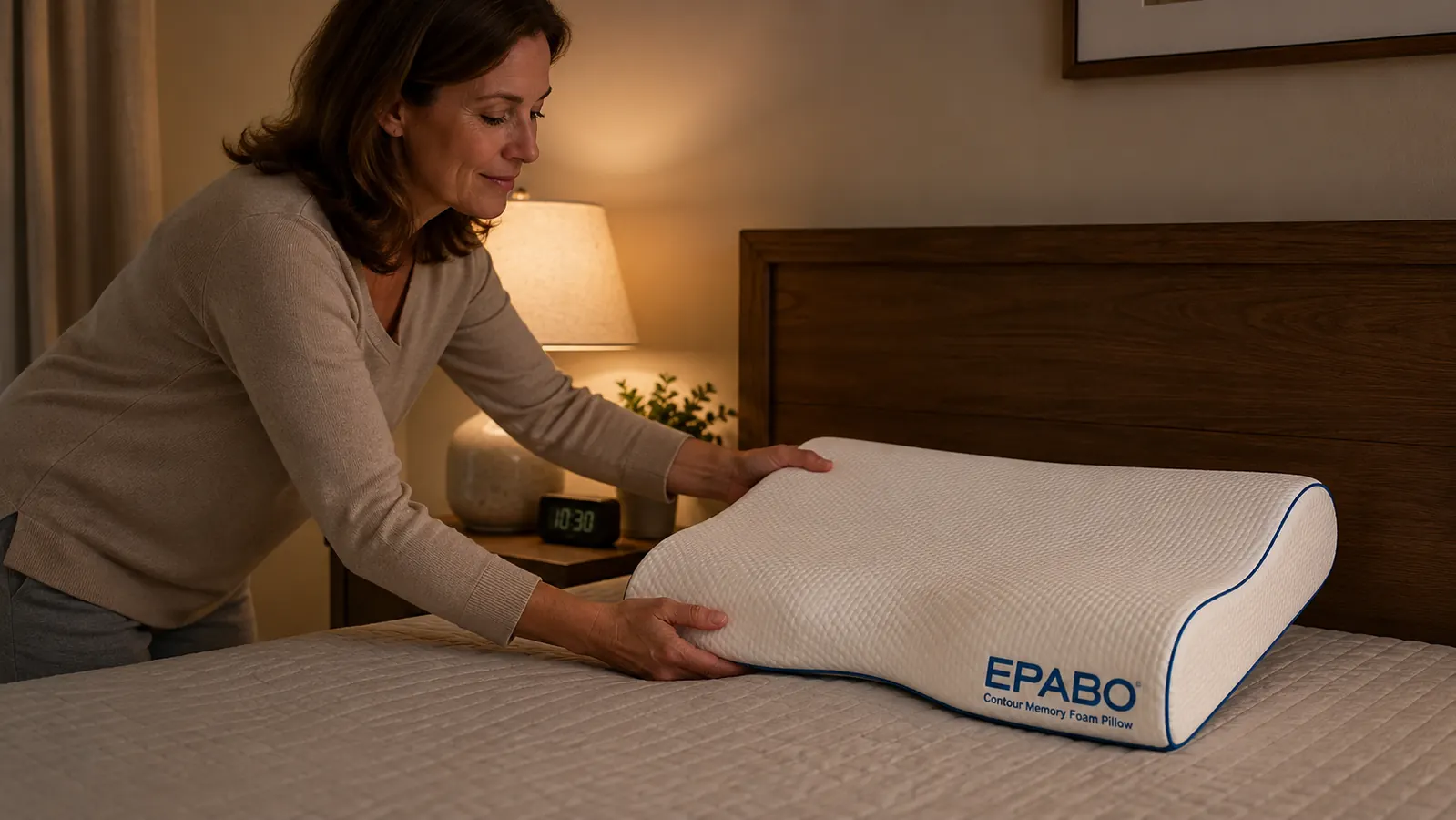
I was wrong about that. But I did not figure it out until my coworker Diane mentioned, casually and without any drama, that she had stopped waking up with neck pain after switching to a contour pillow. Not a wedge. Not a cervical roll. A contour pillow, the kind shaped like a shallow wave, with a lower center and raised sides, designed specifically for how a neck actually rests at night.
I was skeptical. My skepticism had a specific shape by that point. I had spent two years being let down by products that made reasonable-sounding claims, and my patience for reasonable-sounding claims was gone. But the EPABO Contour Memory Foam Pillow had over 27,000 reviews on Amazon and a 4.1 rating, which meant a lot of other tired people had tried it. I ordered it that evening. It arrived two days later.
Still waking up with a stiff neck after trying everything?
The EPABO contour pillow is shaped to hold your neck in alignment all night, not just the first hour. Over 27,000 buyers. Check today's price on Amazon.
Amazon Check Today's Price on Amazon →The first thing I noticed when I took it out of the box was the shape. It is a single piece of medium-firm memory foam, molded into a gentle wave. The lower center is where your head rests when you sleep on your back. The raised sides are for side sleepers, and there are two different heights on each side of the pillow so you can pick the one that works for your shoulder width. It felt like someone had actually thought about the problem before designing a solution, which sounds like a low bar but, based on my pillow history, was not.

I am a side sleeper. I went with the higher loft side the first night. It felt odd at first. The pillow held my neck in a position that was noticeably different from what I was used to, which made me anxious in the way that new sleep conditions always do. I kept waiting to feel uncomfortable. I fell asleep before that happened.
I woke up at 6:47am and my neck did not hurt. I lay there for a moment, genuinely confused, trying to locate the familiar stiffness. It was not there.
I want to be careful here about how I describe what happened next, because I do not want to make it sound like something it was not. This was not a transformation. This was not a life-changing revelation. It was quieter than that. I woke up at 6:47 in the morning, and my neck did not hurt. I lay there for a moment, genuinely confused, trying to locate the familiar stiffness at the base of my skull. It was not there. I turned my head to the right. Fine. To the left. Fine. I got up and made coffee and it was not until I was halfway through the mug that I realized I had not done any of the usual morning stretching.
That was eight months ago. The EPABO pillow is still on my bed. I have slept on it nearly every night since. The neck pain did not vanish forever on night one and never return. There were a few nights in the first two weeks where I woke up stiff, usually because I had ended up in a weird position, not because the pillow failed. Once I figured out which loft height worked better for me, the bad mornings became rare. Now they are genuinely uncommon.

I should say: the pillow has a slight off-gassing smell for the first few days out of the packaging. It aired out completely within about 48 hours on my bed, but if you are sensitive to that kind of thing, let it air out on a chair first. And the medium-firm feel is not right for everyone. My husband tried it for three nights and went back to his regular pillow, because he prefers something much softer. These are real things worth knowing before you order.
What I Would Tell You If We Were Sitting at My Kitchen Table
Here is the honest version: if you have been waking up with morning neck pain for a while and you have not yet tried a properly shaped cervical pillow, this is the thing I would tell you to try first. Not a new mattress. Not a chiropractor appointment, at least not yet. A contour pillow that holds your neck in alignment while you sleep, because the odds are good that a flat pillow is part of what is causing the problem.
The EPABO is not fancy. It does not have a removable cover with cooling fabric, and it does not ship with a certificate from a sleep lab. What it has is a shape that works, a price that does not make you agonize over the decision, and a return policy through Amazon that means you are not stuck with it if it is not right for you. I would not have believed any of that mattered until I actually slept on it. Now I would not trade it.
Two years of bad mornings is a long time to wait to try a pillow that costs less than a grocery run. I am not going to tell you it will fix your neck the way it fixed mine, because I do not know your situation. But I can tell you that I wish someone had pointed me toward it two years earlier, which is exactly why I am telling you now.
If your mornings start with neck pain, your pillow is the first thing to fix.
I spent two years on workarounds that never worked. The EPABO contour pillow was the one thing that actually changed my mornings, and it is still on my bed. Check today's price on Amazon.
Amazon Check Today's Price on Amazon →